Black Vintage Dining Room: Walnut, Brass, and Cream Textiles
Black walls or cabinetry form a dramatic backdrop; balance with walnut, brass fittings, and cream textiles. Three lighting layers do the heavy lifting.
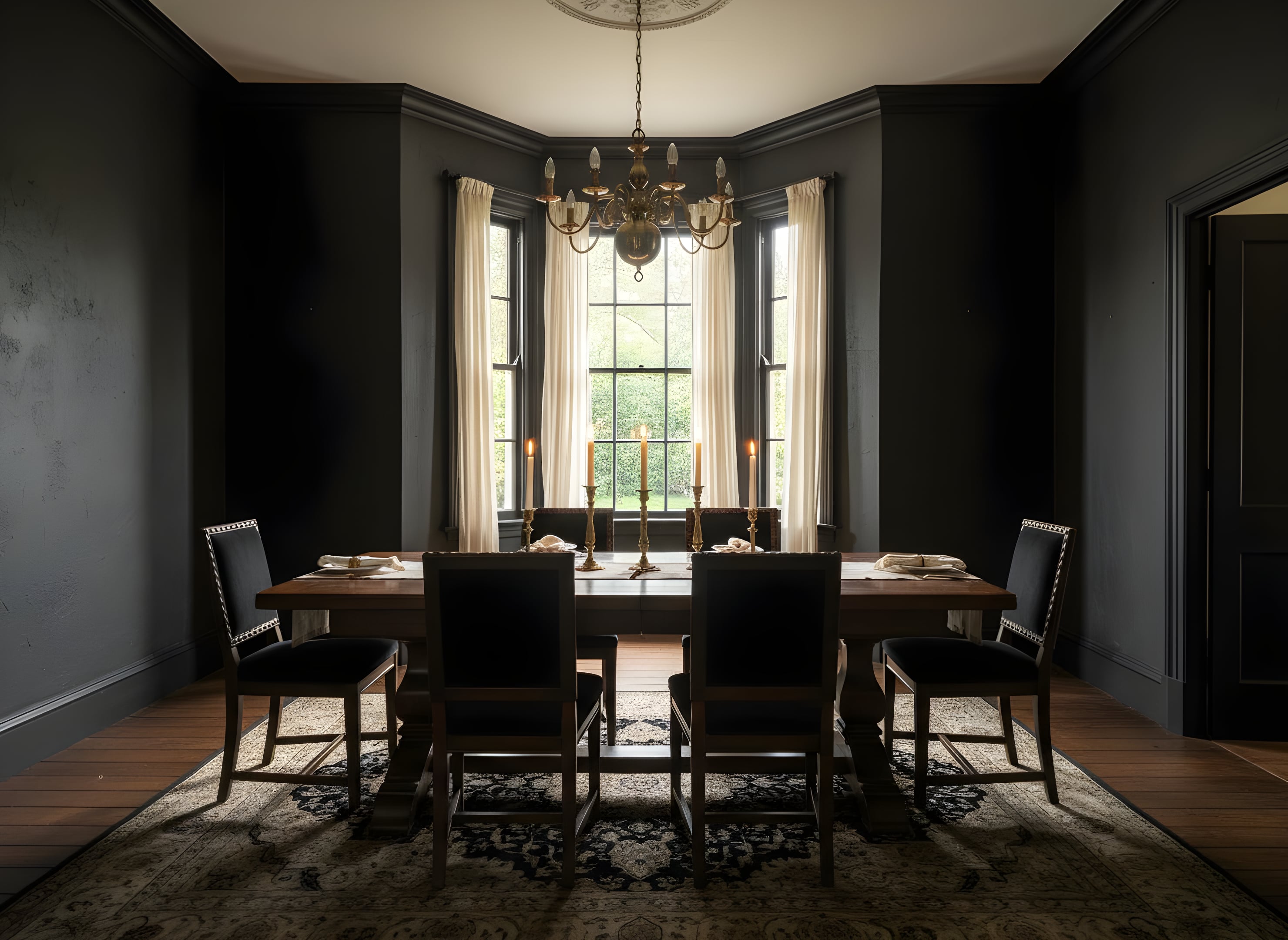
A vintage-inspired dining room in black: a dark wood table, black chairs with brass details, cream textiles, and warm ambient light
Pairing black with vintage elements creates a room that feels intimate and collected. In a dining room, black walls or cabinetry set a dramatic backdrop, while warm woods like walnut and brass hardware bring warmth and character. Cream textiles soften the look, keep the space from feeling heavy, and reflect light during meals. The key is balance: use black as an accent or on larger surfaces in combination with lighter materials, varied textures, and intentional lighting. This approach yields a dining room that reads as timeless rather than trendy, with spaces that invite lingering conversations and comfortable meals.
To achieve a vintage black dining room, start with a dark base—black walls or a black dining table—and layer in lighter textures and natural wood. Use brass or brass-toned hardware and fixtures to add warmth. Choose seating in charcoal or cream to soften contrasts. Introduce texture with linen or velvet upholstery, woven rugs, and ceramic or glass tableware. Finally, select lighting that adds glow without glare, such as warm bulbs and diffusers. The result is a space that feels curated and cozy rather than stark.
Quick Checklist
- Choose a primary black element (wall, table, or cabinet).
- Add walnut wood accents (sideboard, chairs, tabletops).
- Layer with cream textiles (chair cushions, linens, rug).
- Incorporate brass accents (lighting, hardware, décor).
- Use varied textures (velvet, linen, ceramic) for depth.
- Select lighting with warm color temperature (2700K-3000K).
- Keep artwork and accessories minimal but deliberate.
Color Palette
Black
#000000
Primary surfaces or accents
Walnut
#6b4f2b
Furniture and wood tones
Cream
#f5f0e9
Textiles and upholstery
Brass
#b08b4f
Hardware and lighting accents
Charcoal
#333333
Secondary surfaces or textiles
Layout & Space Planning
Position the dining table so there’s easy access from the kitchen and a clear pathway to the room’s entrances. Place a sideboard against a wall in walnut for storage and display, with brass lighting above to highlight the pieces. If space allows, add a small reading nook with a chair in cream and a low table to balance the long dining line. Use a rug with a soft, warm tone to define the dining area and soften echoes. Keep wall art minimal and well-spaced to prevent the room from feeling crowded.

Download our app
Design your Vintage Dining Room on the go
Upload your room photo and see it transformed - anywhere, straight from your phone or tablet.


Frequently Asked Questions
What color should the ceiling be in a black vintage dining room?
Keep the ceiling light and clean—soft white or near-white (about 1-2 shades lighter than the walls). This helps bounce light and prevents the room from feeling boxed in.
What materials pair well with black in a vintage look?
Wood (walnut or oak) for furniture, brass or bronze hardware, and textiles like linen or velvet in cream or taupe add warmth and texture without competing with black.
How can I add color without overpowering the black theme?
Introduce subtle color through upholstery, artwork, or a rug in muted tones like warm creams, earthy greens, or deep browns. Keep the palette cohesive with the five-color approach.
What lighting works best in a black dining room?
Warm-white bulbs (2700K-3000K) with dimmers are ideal. Use multiple sources—pendants, a wall sconce, and a table lamp—to create depth and reduce glare on dark finishes.
How do I maintain a vintage feel without it looking dated?
Choose timeless silhouettes (simple lines, well-crafted pieces) and combine them with well-kept surfaces. Mix in a few modern notes sparingly, like a contemporary rug or a minimal vase, to keep the look fresh.
Additional Perspectives
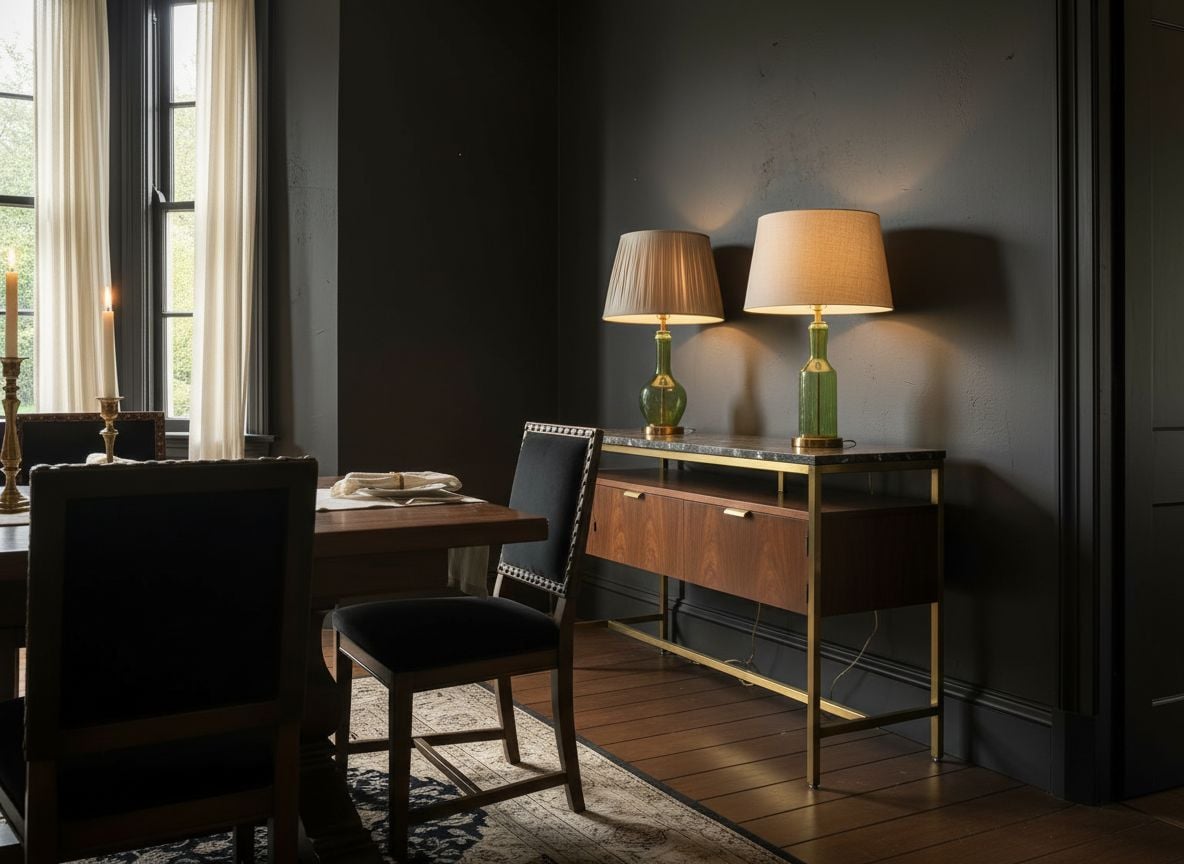
Close-up of seating and storage area: black velvet chairs, brass accents, and a marble-topped console
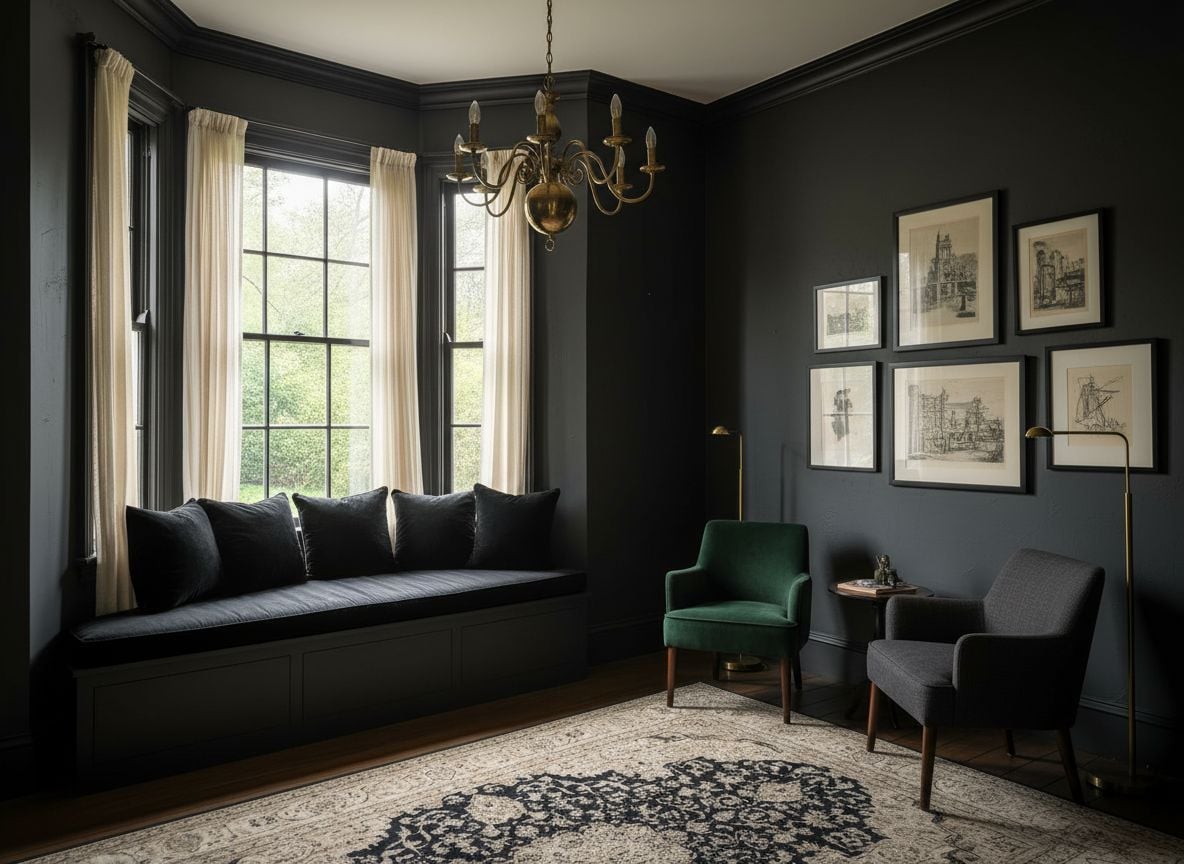
Window-view and art alcove: window seat with black cushions and a curated vintage art display
Related Design Ideas
Ready to Transform Your Dining room?
Upload your room photo and see it transformed with AI into any style. Get started in seconds with RoomStylePro.
Try RoomStylePro Free