Gray Modern Dining Room: Wood Table & Layered Textures
Gray walls soften light; mix matte and tactile finishes—add a linen chair and leather accent for warmth. Three lighting layers help.
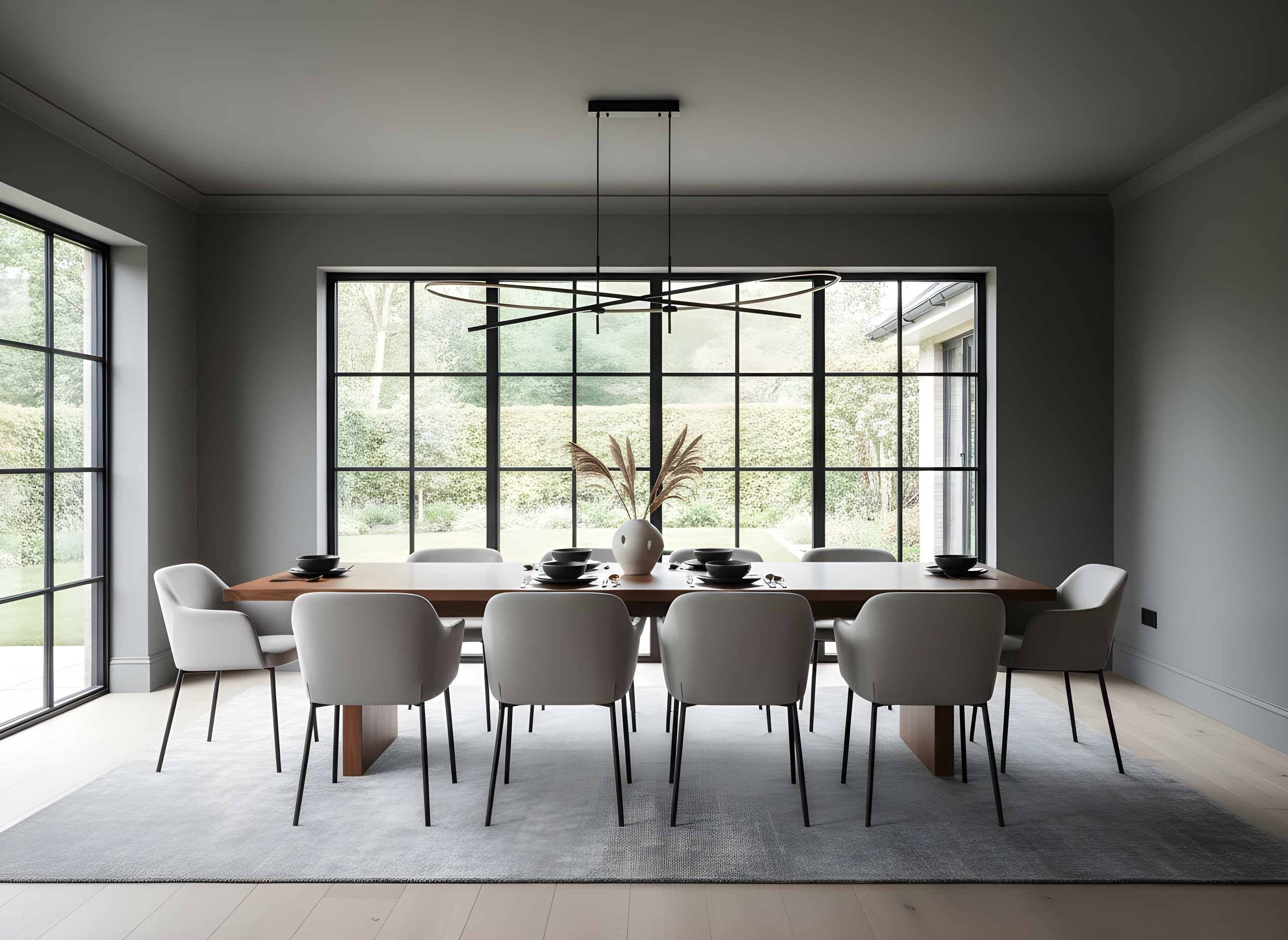
Gray-on-gray dining room with warm wood, layered textures, and natural light
This modern gray dining room uses a simple approach: a quiet color base, warm wood, and layered textures. Gray walls create a calm backdrop that makes natural light feel softer, while a wood table adds warmth and character. By mixing matte and tactile finishes—soft wool textiles, a linen chair, a leather accent, and a ceramic vase—you get depth without clutter. The space remains versatile: it works for daily meals, casual gatherings, or a quiet home work moment. The key is balance. A few well-chosen pieces in different textures keep the room from feeling cold, and the right lighting makes the design feel inviting at any hour.
Follow these concrete steps to implement a modern gray dining room that feels cohesive and comfortable:
1) Set the base color on walls and floors with a neutral gray. 2) Choose a dining table in a warm wood tone to soften the gray and add contrast. 3) Pick seating with a mix of textures (fabric, leather) for depth. 4) Layer textiles—a rug under the table, cushion accents, and a throw—to add warmth. 5) Add lighting at different levels: a central chandelier for task light, wall sconces or a floor lamp for ambiance. 6) Introduce art and ceramics in subtle tones to keep the palette quiet. 7) Plan storage and surfaces that stay uncluttered by using a slim sideboard or built-ins. These steps keep the space useful for meals and easy to maintain.
Quick Checklist
- Set wall color to a mid gray like #4a4f54
- Choose a wood table in a warm tone such as walnut
- Mix chair textures (fabric, leather)
- Add a rug to define the dining zone
- Install a central light fixture + ambient lighting
- Incorporate muted art and ceramics
- Provide storage with a slim sideboard or cabinet
Color Palette
Charcoal
#2b2b2b
wall paint, accents, light frame details
Slate gray
#4a4f54
softer wall areas, furniture surfaces
Medium gray
#8b8f95
upholstery, textiles, rugs
Light gray
#cbd2d9
softer upholstery, drapery, linens
Off-white/egg shell
#f0f2f5
ceilings, trim, subtle contrast
Layout & Space Planning
Layout should prioritize clear zones without crowding. Position the dining table so there’s at least 3 feet of clearance around it. If space allows, create a small reading or display area near a window to extend the room’s function. Use a low-profile sideboard on one wall to keep tabletop clutter down. Align art and mirrors to reflect light and create a sense of depth. Keep curtains light and airy to maintain a soft, diffused glow. The result is a dining area that feels cohesive and easy to live in, not staged for photos.

Download our app
Design your Modern Dining Room on the go
Upload your room photo and see it transformed - anywhere, straight from your phone or tablet.


Frequently Asked Questions
Is gray a good base color for a dining room?
Yes. Gray creates a calm backdrop that lets wood tones and textiles stand out. Use slightly warmer gray on walls to avoid a clinical feel.
What lighting works best in a gray dining room?
Combine task lighting above the table with ambient lighting from sconces or a floor lamp. Dimmer switches help adapt the mood for meals or work.
How can I add warmth without changing the color?
Introduce wood furniture, warm textiles, and ceramic accents. A rug with natural fibers also softens the space.
How much storage should I include?
A slim sideboard or low cabinet provides surface space and keeps dishes and linens accessible without crowding the room.
What textures should I mix?
Combine wool or boucle upholstery with linen, leather, or a woven rug. Subtle texture differences keep the space interesting.
Additional Perspectives

Dining area seen from the kitchen, highlighting the long table and storage wall

Window seating area that creates a secondary, relaxed zone within the dining room
Related Design Ideas
Ready to Transform Your Dining room?
Upload your room photo and see it transformed with AI into any style. Get started in seconds with RoomStylePro.
Try RoomStylePro Free