Industrial Charcoal Dining Room | RoomStylePro
Industrial dining room in charcoal tones with concrete textures, steel accents, and warm wood. Practical tips for layout, palette, and lighting.

Industrial dining room in charcoal tones with metal and wood elements, concrete flooring, and natural light
The combination of charcoal, concrete textures, and industrial detailing creates a dining room that feels grounded and practical. Charcoal walls recede slightly, letting natural light reveal texture in concrete floors and steel accents. A simple wooden table and metal chairs keep the space honest and easy to live with, while layered lighting and a few warm wood touches prevent the room from feeling cold. This approach works well in spaces with high ceilings or open-plan layouts, where raw materials become the room’s character rather than a distraction. The key is balance: pair hard surfaces with softer textures like a wool rug, linen drapes, or a textured ceramic to add depth without clutter.
To pull off an industrial charcoal dining room, start with a durable base: a charcoal-painted wall or a charcoal plaster, a concrete or stained-wood floor, and a simple dining table in dark metal or stained wood. Add seating with metal frames and wood seats for warmth. Introduce light through pendant fixtures over the table and a floor lamp in a corner. Layer textures with a jute rug, linen curtains, and a ceramic vase. Finally, keep the palette cohesive by repeating the same charcoal, gray, and natural wood tones across furniture and decor.
Quick Checklist
- Choose a durable finish for walls and floors (matte charcoal paint or plaster; sealed concrete or tiles).
- Select a dining table in dark metal or stained wood; pair with charcoal chairs for a unified look.
- Install pendant lighting centered over the table; add a floor lamp or wall sconce for ambient light.
- Incorporate texture with a rug, textiles, and ceramic accents in similar tones.
- Limit decor to 3–5 key pieces to avoid visual clutter.
- Use window treatments that allow daylight while softening the room (light linen or sheer).
- Add a small plant or two and a single piece of art to introduce subtle color accents.
Color Palette
Charcoal Black
#333333
Walls, ceilings, or large furniture to ground the space.
Steel Gray
#4A4A4A
Secondary walls, cabinetry, or metal hardware.
Concrete Gray
#8A8A8A
Flooring or large surface areas that read as concrete.
Copper/Rust
#B76E31
Accent decor like vases, lighting accents, or a warm-toned rug for contrast.
Warm White
#F5F5F5
Ceiling, trim, or textiles to soften the palette and reflect light.
Layout & Space Planning
Position the dining table in a central, clearly defined zone. If the room allows, place a reading nook or a secondary seating area along a wall to create two functional zones without crowding the space. Keep windows clear to maximize natural light; use sheer drapes to maintain a soft backdrop against the charcoal walls. Use area rugs to delineate zones and to add warmth underfoot. Ensure there’s at least 24–30 inches of clearance around the table for comfortable movement. Lastly, align lighting with the table surface to avoid harsh shadows and to highlight the textures of concrete and metal.

Download our app
Design your Industrial Dining Room on the go
Upload your room photo and see it transformed - anywhere, straight from your phone or tablet.


Frequently Asked Questions
What charcoal shade works best in a dining room?
Choose a deep charcoal with matte finish (#333333 to #2B2B2B). It reads as a neutral backdrop and hides fingerprints on high-traffic walls.
How do I keep the industrial look from feeling cold?
Add warmth with wood elements, textiles like a wool rug or linen drapes, and a copper or brass accent in small doses.
What lighting should I use over an industrial table?
Two to three pendant lights centered over the table work well; aim for a color-balanced LED color temperature around 3000K–3500K for warmth.
Which flooring suits this style?
Polished or matte concrete, stained hardwood, or large-format tiles in gray tones work best with charcoal walls.
How can I add texture without clutter?
Choose one textured rug, one ceramic vase, and one piece of wall art in a similar tonal range to keep the space cohesive.
Additional Perspectives

Dining area from the kitchen side showing the long charcoal dining table and metal chairs
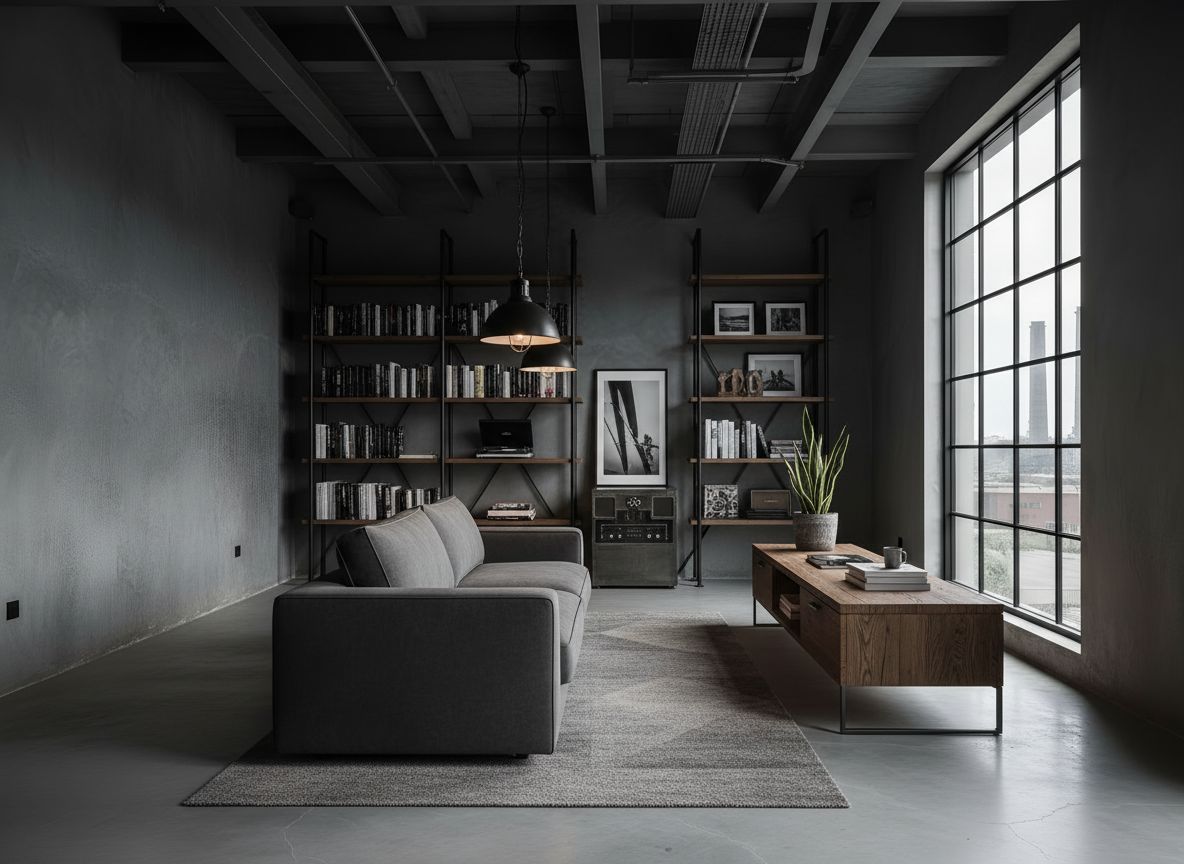
Reading nook and window seating area with industrial shelving and warm wood accents
Related Design Ideas
Ready to Transform Your Dining room?
Upload your room photo and see it transformed with AI into any style. Get started in seconds with RoomStylePro.
Try RoomStylePro Free