Charcoal Retro Dining Room: Cream, Warm Wood & Matte Finish
Balance matte charcoal with cream walls and warm wood; anchor the layout with a simple rectangular table and add muted avocado or burnt-orange accents.

Charcoal dining room with mid-century chairs and warm wood accents
Charcoal can feel bold, but when paired with creamy neutrals and warm wood, a retro dining room becomes welcoming and timeless. The key is balancing contrast with texture: matte charcoal surfaces ground the space, while cream walls keep it light. Add subtle color accents—like avocado greens or burnt orange—through textiles and art to reference retro vibes without shouting. A simple rectangular table, tapered legs, and clean lines anchor the room, while a practical sideboard provides storage and a surface for display. This combination creates a space that reads retro without feeling dated, and it remains flexible enough to evolve with changing decor trends.
To pull off a retro charcoal dining room, focus on three things: color balance, texture, and scale. Keep the charcoal elements as anchor pieces (table, chairs, a feature wall or cabinets) and offset them with creamy walls and light wood tones. Introduce texture through fabric (linen chairs, woven placemats), a soft rug under the table, and tactile materials like ceramic or stone in accessories. Pay attention to lighting; a warm pendant or sconce that casts soft shadows helps soften the dark surfaces. Finally, curate art and accessories that nod to mid-century design—think clean lines, geometric shapes, and limited color accents—to avoid visual clutter while keeping the retro spirit alive.
Quick Checklist
- Choose one dominant charcoal element (table or wall) and keep others lighter
- Use cream walls to brighten the space and reflect natural light
- Incorporate warm wood accents for contrast
- Add textiles with subtle retro patterns in muted tones
- Select lighting that emits warm, soft light
- Limit bold color accents to 1–2 areas (e.g., cushions, art)
- Incorporate a simple, uncluttered gallery for balance
Color Palette
Charcoal
#2f2f2f
Anchor furniture, table, or a feature wall
Cream
#f7efe6
Wall paint and larger textiles
Burnt Orange
#d9641f
Accent items like napkins, vases, or a rug edge
Avocado Green
#5a6f3c
Smaller decor or cushions for retro nods
Warm Oak
#b0874a
Wooden table legs, sideboard, frames
Layout & Space Planning
Layout in a dining room like this should prioritize flow and readability. Place the dining table in a central zone with at least 36 inches of clearance around it for chairs to move comfortably. Position storage, such as a sideboard or cabinet, on an adjacent wall to keep surfaces uncluttered. If a window is nearby, orient seating to take advantage of natural light without glare on tabletop surfaces. A small seating or display nook can soften corners, while a rug under the table defines the dining zone. Use a single focal light above the table to create depth without creating harsh contrasts with dark surfaces.

Download our app
Design your Retro Dining Room on the go
Upload your room photo and see it transformed - anywhere, straight from your phone or tablet.


Frequently Asked Questions
Can charcoal be used in small rooms without making them feel cramped?
Yes. Pair charcoal with cream walls and light wood to keep the space feeling open. A lighter floor and natural light help balance the dark surfaces, while a reflective or glossy surface on a sideboard can add brightness.
What textiles work best with retro charcoal?
Opt for natural fabrics like linen or cotton in cream or muted tones. A woven rug with a simple geometric pattern and soft cushions in avocado or burnt orange add retro character without overwhelming the space.
How many accent colors should I use?
Limit yourself to 1–2 accent colors. In this palette, burnt orange and avocado green work with charcoal and cream. Use them in small doses—napkins, artwork, or a throw—to avoid visual clutter.
What lighting helps soften charcoal surfaces?
Warm, dimmable lighting is best. Pendants with warm bulbs, wall sconces, or a floor lamp with a fabric shade helps diffuse harsh shadows and makes the room feel inviting.
Is wood involvement essential in retro charcoal design?
Wood is key to authentic retro feel. Use warm oak or walnut for tables, sideboards, and frames to bring warmth and texture that counterbalances charcoal.
Additional Perspectives

Dining area angle showing the table setting and sideboard against a cream backdrop
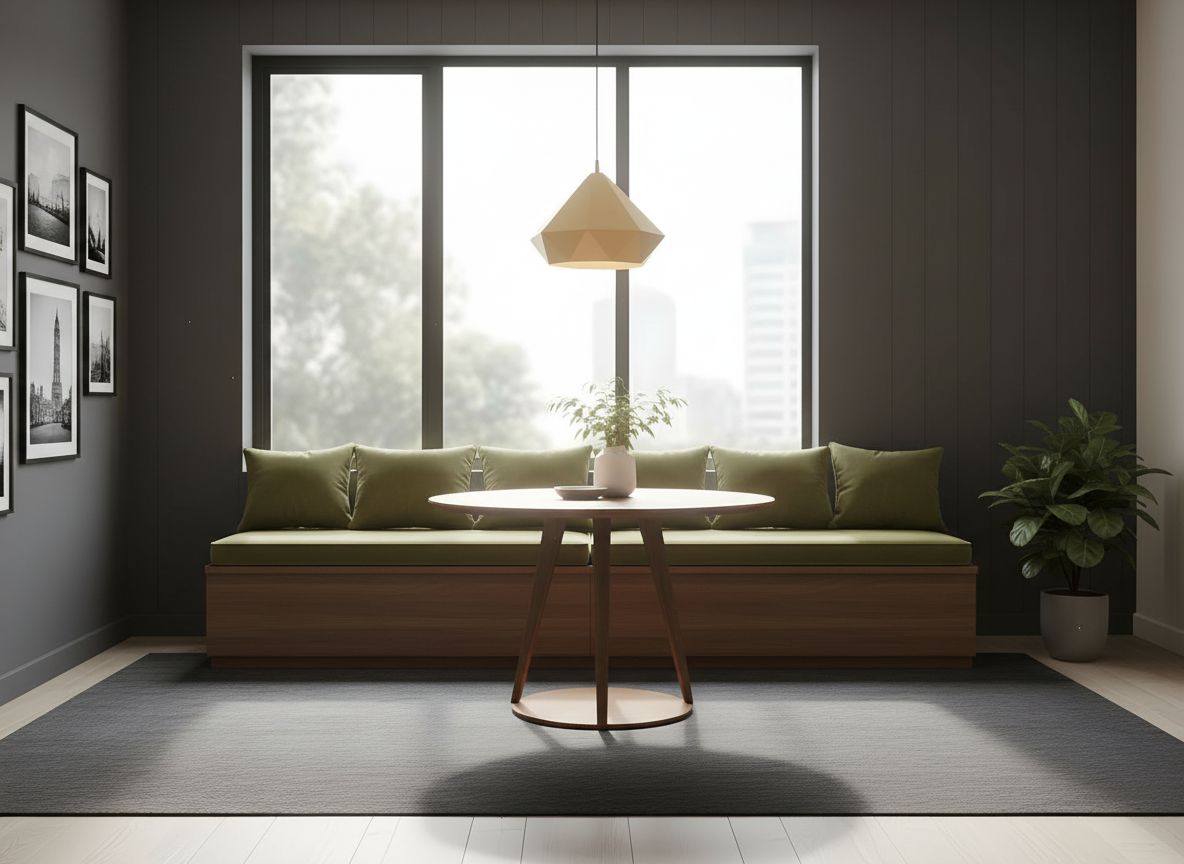
Window nook and gallery wall to balance bold charcoal with softer textures
Related Design Ideas
Ready to Transform Your Dining room?
Upload your room photo and see it transformed with AI into any style. Get started in seconds with RoomStylePro.
Try RoomStylePro Free